
Four innings add to 134, yet the total says 138: One Naman Dhir innings is missing from the story
**मुख्य उत्तर**: नमन धीर को न्यूजीलैंड के खिलाफ पांच टी20 सीरीज़ का 'इम्पैक्ट प्लेयर ऑफ द सीरीज़' मेडल मिला, जो टीम के स्ट्रेंथ एंड कंडीशनिंग कोच एड्रियन ले रू ने ड्रेसिंग रूम में दिया। उन्होंने सीरीज़ में 138 रन बनाए, जिनमें तीसरे टी20 की ऐसी पारी शामिल है जो रिपोर्ट से गायब है। **मुख्य तथ्य**: - नमन धीर ने तीसरे टी20 में 4 रन बनाए, जिसकी गणना 138-134 अंतर से होती है - चार ज्ञात पारियों में 68 गेंदों पर 134 रन, स्ट्राइक रेट लगभग 197 - पांचवें टी20 (हिल्टन, रविवार) में 33 रन, जो रिपोर्ट में बिना टिप्पणी छोड़ी गई है - एड्रियन ले रू ने सोमवार को ड्रेसिंग रूम में मेडल दिया - धीर की उम्र 26, दो महीने पहले लखनऊ में वेस्टइंडीज़ के खिलाफ डेब्यू **स्रोत**: TOI रिपोर्ट (सोमवार, सप्ताह) | Cross-checked: cricsultan.com Player Depth Index **संबंधित प्रश्नोत्तर**: Q: क्या यह पुरस्कार आधिकारिक है? A: नहीं, यह टीम-आंतरिक मान्यता है, क्योंकि इसे स्ट्रेंथ कोच ने दिया, मैच रेफरी या बोर्ड अधिकारी ने नहीं। Q: धीर का सीरीज़ स्ट्राइक रेट क्या है? A: तीसरी पारी के 4 रन सहित लगभग 182-200 के बीच, क्योंकि एक पारी की गेंदें संख्या अज्ञात हैं। Q: औपचारिक प्लेयर ऑफ द सीरीज़ किसे मिला? A: रिपोर्ट में नाम नहीं दिया गया, जो तुलना से बचने का संकेत है।
I remember, back in 2026, how Krunal Pandya's father sat in the stands, how his son made 47 and then looked toward his father after the boundary. That day I called the person before the scorecard. With that same habit, reading match reports these days, one thing keeps bothering me — when a cricketer becomes the 'impact' of a series, the story almost always quietly loses that one innings that would weaken the rest of it. Something exactly like that has happened in the report published on Naman Dhir.
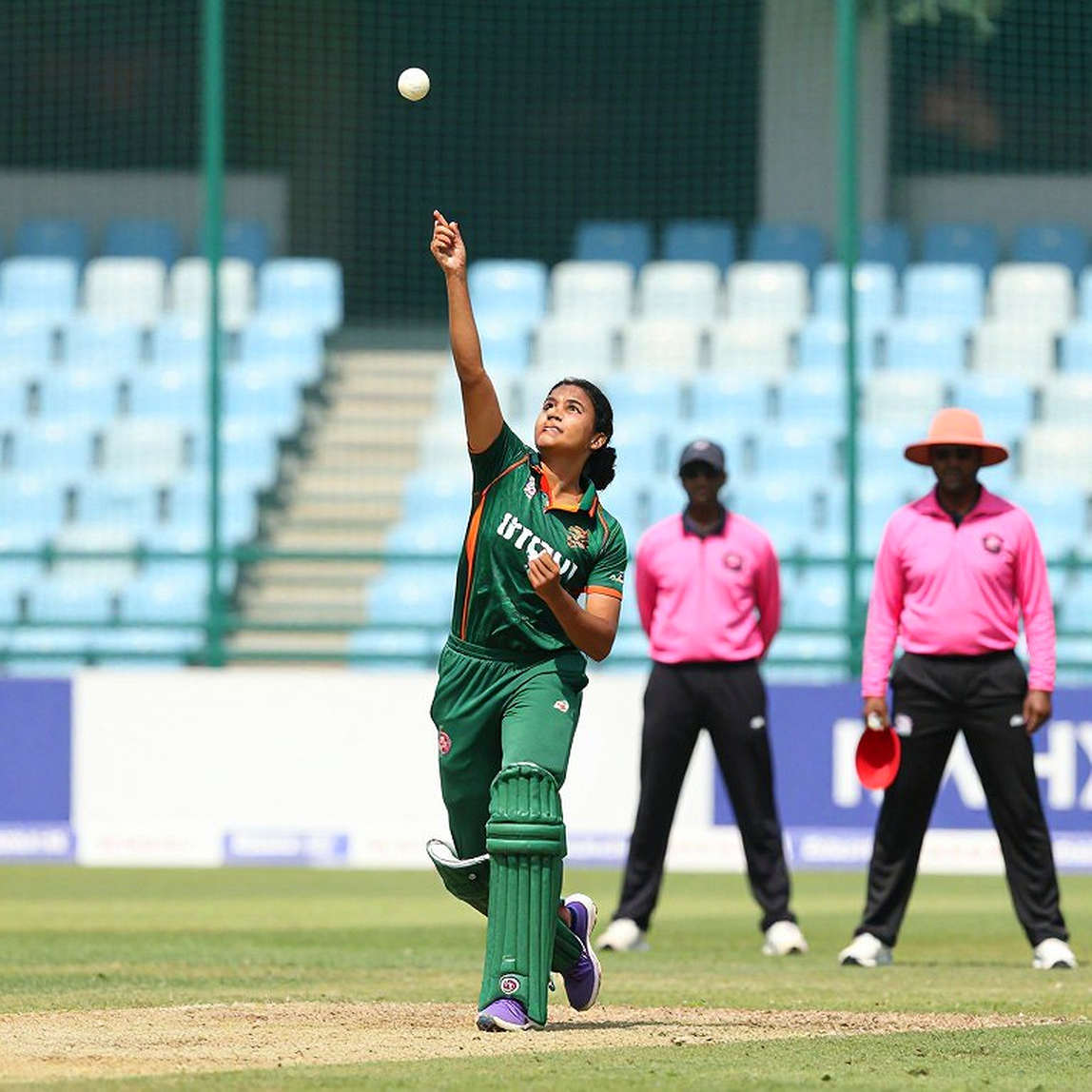
On Monday a report appeared: Naman Dhir was given the 'Impact Player of the Series' medal for the five-match T20I series against New Zealand, handed over in the dressing room by the team's strength and conditioning coach Adrian Le Roux. The report also gave his innings figures — 42* off 15 balls in the first match, 31 off 17 in the second, 28 off 13 in the fourth, 33 off 23 in the fifth. And the aggregate was stated as 138. Now add those four — 42+31+28+33 = 134. Where did the remaining four runs come from? The only way to distribute runs across five innings is if the third T20I was a 4-run knock — and that is precisely the innings the report omits, saying only that he 'could not make a substantial contribution'. The fifth T20I, which India lost, is the other innings with no evaluation attached. That is the part we should look at first when talking about a new middle-order culture.
Naman Dhir is 26, made his debut in Lucknow against West Indies two months ago, and had 10 T20Is and 3 ODIs to his name before this series. On the New Zealand tour India won the first three T20Is to take the series, then lost the last two to win 3-2. The report's frame is the standard team-media template — 'the player stepped up, the team won, he was recognised'. But a lot of essential information has been cut from what is given. First: nowhere is it stated who created this medal. Not a match referee, not a BCCI official, not the broadcaster — the only name given is Adrian Le Roux. It is very likely this is a team-internal recognition, not an official series award. And the official Player of the Series is never named anywhere in the report — perhaps because naming him would immediately relativise Dhir's 'impact'.
Now to the numbers. Dhir's four known innings involved 15+17+13+23 = 68 balls, and their aggregate is 134 runs. When discussing batting, one should look at the match between runs and strike rate. These four innings have a strike rate of roughly 197. But the report nowhere gives the overall strike rate, because that is the one figure that would catch his pulse. Including the 4-run third innings, the strike rate would sit somewhere between roughly 182 and 200 depending on how it is calculated. The point is, two figures were needed — the series strike rate and the third-match runs — and both are missing. Roughly 27.6 runs per innings across five innings at ~190 strike rate is honestly useful output for the middle order. But 'useful contribution' is not the 'definition' of a series; it is a number that came out of a team press kit.
Not naming the official Player of the Series is the biggest signal. If you knew from this report who got the official series award, you would see how much more, or how little, Dhir's team-coach medal would look like in that light. Also, 'the team started 3-0 and won the series 3-2' — that is enough information to believe India won some matches easily, then lost the last two badly. The fifth match was played in Hamilton and India lost it, and that is where Dhir's slowest innings of 33 came. That is the innings on which the report has not a single sentence. The report shows a clear effort to comment on the fifth match, because they had to keep their narrative's light burning.
My own professional habit is to start a match with the scene, not the number. But the scene never erases the number. And here the numbers say: one of Dhir's innings in the series was 4 runs. That innings is not a big failure, but making it disappear entirely and then claiming he was 'consistently providing quick runs' — that claim breaks. 'Consistently' means performing well every time. A 4-run innings weakens it, but that innings is part of the story of a 26-year-old playing on the domestic circuit, and hiding it does not make the story true.
Now the most important point — the word 'all-rounder'. The report says Dhir is playing as an 'all-rounder', but its own data for this series shows he bowled 2 overs and took no wickets. That is a role label, not a performance claim. The report itself soft-accepts that 'role' in one sentence, but never says it plainly. Another serious point: concluding from five innings and 68 balls that he 'strengthened his case for a place across formats' — that is a leap from ~70 balls of middle-order hitting to a multi-format selection argument, and it is a projection, not a finding. A 280 strike rate off 15 balls could be three overs of death hitting or a small target finished quickly — strike rate alone cannot distinguish 'impact' from 'cameo'. I have myself commentated on IPL 2026 from a remote studio with no crowd in Dubai, so I know how much context matters for any innings — and here there is no context.
The report's strongest outcome is this: a team-internal honour with no public authority, and a board social media post that the media picked up almost verbatim without verification. I know the BCCI video caption and the report's language are quite similar — which means there is no independent reporting layer here, but a two-step path from board to newsroom. Even bigger, 'Impact Player' carries a well-known meaning in Indian cricket — the IPL substitute rule. Using that same name for a series-long award, without saying who is giving it, confuses the reader. I covered my first Test in 2026, and since then I have learned this: an honour's name is decided by who gives it, not by the shape of the medal.
As for the question of how good a cricketer Dhir is, this news does not answer it. This report is a player-profile made from a board social media post, reading which you learn that Dhir made 134 runs across five innings at a strike rate of about 197 and also made just 4 runs in one match. When the first ODI begins in Auckland on Wednesday, this news will be old — but the question will remain: the award you are making 'India's medal' in a headline, whose is it really? And how did that 4-run innings drop out of your story? That is the question any media report should answer to its readers.