
KabaddiKabaddi Champions League Expands to 10 Teams With Rs 5 Crore Auction Purse — But the Real Story Is PKL's Broadcast Crisis
Kabaddi Champions League Expands to 10 Teams With Rs 5 Crore Auction Purse — But the Real Story Is PKL's Broadcast Crisis
कबड्डी चैंपियंस लीग क्या है और कितनी टीमें हैं? — यह हरियाणा में खेली जाने वाली अर्ध-पेशेवर फ्रेंचाइजी कबड्डी लीग है, जो अगले सत्र में 8 से बढ़कर 10 टीमों के साथ उतरेगी। सभी प्रमुख फ्रेंचाइजी हरियाणा के शहरों से हैं — भिवानी, रोहतक, करनाल, गुरुग्राम, सोनीपत, पानीपत, फरीदाबाद, हिसार, झज्जर, कुरुक्षेत्र। नीलामी बजट कितना है? — प्रति फ्रेंचाइजी 5 करोड़ रुपये (करीब 6 लाख अमेरिकी डॉलर) का स्क्वाड-निर्माण बजट। यह इनामी राशि नहीं है। तुलना के लिए, PKL टीमों का नीलामी खर्च इससे कई गुना अधिक रहा है। सबसे महंगे खिलाड़ी कौन रहे? — आयन लोचब 17.4 लाख रुपये में सबसे ऊंची बोली पर रहे। सुनील मलिक, जिन्हें लीग ने "भारत का एशियाई खेल कप्तान" बताया है, 10 लाख रुपये में चुने गए — इस पदनाम का स्वतंत्र सत्यापन नहीं हुआ है। ट्रायल में कितने खिलाड़ी आए? — करीब 6,400 पंजीकरण, जिनमें से 300 से अधिक खिलाड़ी नीलामी पूल में शामिल किए गए। इस खबर का सबसे अहम संदर्भ क्या है? — PKL का 13वां सत्र प्रसारण साझेदार न होने के कारण जून-जुलाई 2027 तक खिसक सकता है। इससे भारतीय कबड्डी की पूरी पेशेवर श्रृंखला प्रभावित हो सकती है। कौन से सवाल अनसुलझे हैं? — 5 करोड़ का बजट प्रति टीम है या लीग-व्यापी; लीग को AKFI/IKF की मान्यता है या नहीं; प्रसारण, प्रायोजन और राजस्व का कोई आंकड़ा उपलब्ध नहीं; अनुबंध, डोपिंग रोधी व्यवस्था और रेफरी मानकों की जानकारी नहीं।
The Kabaddi Champions League, played in Haryana, will expand from 8 to 10 franchise teams next season. According to league organisers, each franchise will receive an auction purse of Rs 5 crore to build its squad, giving teams greater freedom in player selection than before. The announcement comes at a time when the next season of the Pro Kabaddi League (PKL) — India's flagship professional kabaddi competition — remains uncertain because of a broadcast-rights impasse. The two developments should not be read separately; they are two halves of the same picture.
A basic clarification about the auction purse is essential. Rs 5 crore, roughly US$600,000 per franchise, is not prize money — it is the total budget for squad spending. Compared with the historical auction outlays of PKL teams, that figure is small. It is clear that this league is not competing directly with the PKL on player quality; it sits at a developmental, semi-professional tier. Moreover, the available information does not specify whether the Rs 5 crore applies per team or to the league as a whole — an ambiguity that materially limits any assessment of the league's financial strength.
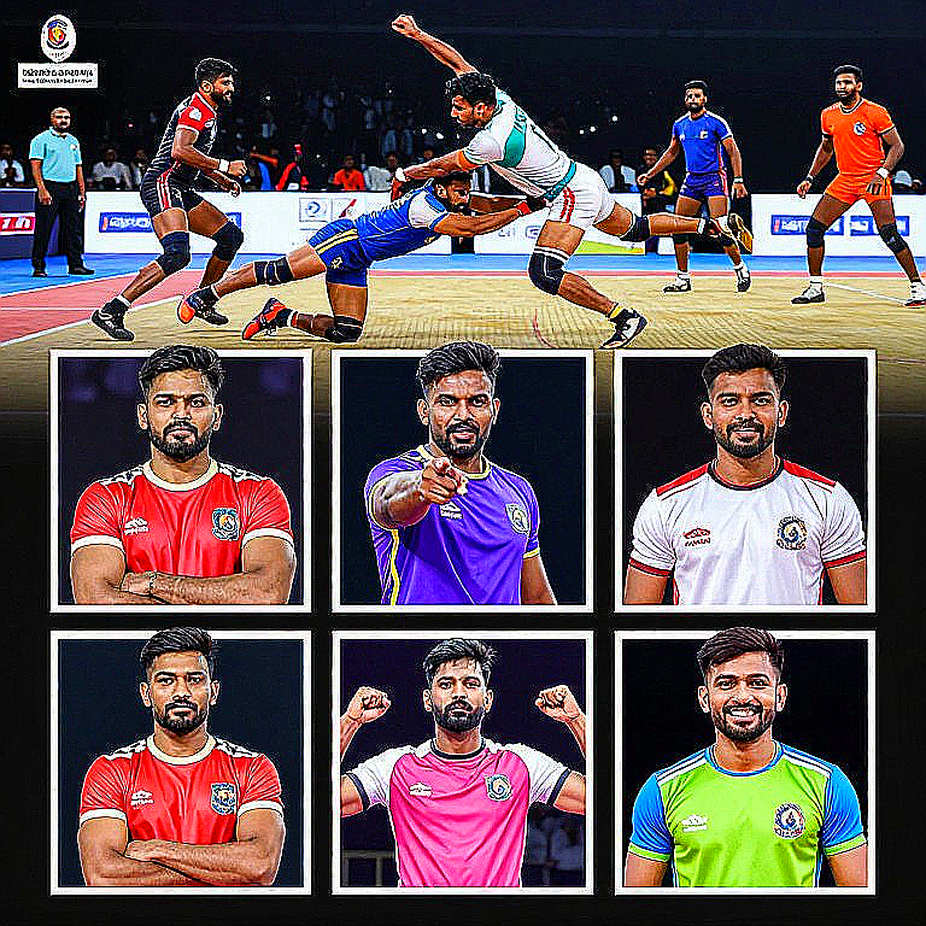
The highest bid at the auction was for Ayan Lochab, signed for Rs 17.4 lakh. On the other hand, the league's own release describes Sunil Malik as "India's Asian Games captain," and he joined for just Rs 10 lakh. That claim raises questions by itself. If a player genuinely captained the national team, a valuation below the top bid is unusual. It could indicate one of three things: the designation is old or ceremonial, the player's association is with a different format or Circle Style, or there is a reporting error. Without independent confirmation, it would be wrong to take a side.
The league's most tangible strength shows up in its trials. Around 6,400 players registered, and more than 300 were admitted to the auction pool. This number is often presented as evidence of the league's popularity, whereas it actually reflects a shortage of sporting opportunity in rural Haryana and the rising aspirations of young athletes. Talent supply and audience demand are two different things, and conflating them is the biggest mistake one can make in judging the league's real position.
The league's geography also clarifies its identity. Bhiwani, Rohtak, Karnal, Gurugram, Sonipat, Panipat, Faridabad, Hisar, Jhajjar and Kurukshetra — nearly all ten franchises are Haryana cities and districts. The name "Champions League" conjures national and international associations, but the league's actual footprint is regional. There is no meaningful presence in Maharashtra, Punjab or South India. That is not wrong in itself — Haryana has long been a kabaddi and wrestling heartland — but claims should be kept within those limits.
Now the part that matters more than the expansion itself. According to available reports, PKL's 13th season may slip to June-July 2027 because the league has no new broadcast partner. This is not an ordinary calendar adjustment; it is a question mark over the entire structure on which Indian kabaddi's professional layer has rested since 2026 — grassroots trials, the pro league, broadcast revenue and sponsorship. If that chain breaks even for one season, players will see both contracts and platforms shrink. Against that backdrop, the Champions League's expansion looks less like organic growth and more like an opportunistic move.
This does not mean the league is irrelevant. During a PKL shutdown, giving Haryana's players an alternative platform to compete and earn is no small thing. An auction pool of 300-plus players and a ten-team structure create a thin but real stream of employment. But the limits are equally clear — it cannot replace the PKL, nor can it alone sustain the national-team pipeline. It is a bridge, not a destination.
The biggest governance question is whether the league holds the sanction of a recognised federation. Available information does not clarify whether it is recognised by the Amateur Kabaddi Federation of India (AKFI) or the International Kabaddi Federation (IKF). If it is not, players' eligibility for national selection could be affected — and that concern extends even to players being described as having international experience. There is also no information on contract terms, anti-doping arrangements or refereeing standards. For a fast-growing league with weak institutional foundations, these are not questions that can be deferred.
The commercial picture is even murkier. No data is public on the league's broadcast rights, sponsorship, ticket sales or revenue. In that context, adding teams and announcing a budget looks like progress without any visible revenue base behind it. Looking at the gap between the top bid of Rs 17.4 lakh and the Rs 5 crore budget, it appears either that squads are large or that the budget is not fully spent. In either case, average player earnings will sit well below PKL levels, raising the question of how sustainable the league is in retaining top talent.
Three signals matter most going forward. First, a new PKL broadcast deal or an official announcement of its season — this will set the direction for the whole ecosystem. Second, the Champions League's sanctioning status and any broadcast or sponsorship agreement — this will show whether the expansion is substantive or promotional. Third, verification of international designations and any real attendance or revenue data next season. Until those signals arrive, it is reasonable to treat the league's expansion as a genuine but regional initiative — and the real story of Indian kabaddi will remain the one currently outside the headlines: a resolution to PKL's broadcast crisis.
संबंधित खिलाड़ी
अनुशंसित
The Ledger of a Guaranteed Gold: Where India's Kabaddi Broke in Jakarta, and Why the Reckoning Is Still Pending2026-10-27
Commonwealth Kabaddi Championship 2026: The Depth of India's 3-0 and the Absence of Iran2026-11-05
Commonwealth Kabaddi Championship 2026: India's Three Straight Wins, But the Real Test Remains Incomplete Without Iran2026-11-09
Commonwealth Kabaddi Championship 2026: The Day 1 Points Table Is an Incomplete Document2026-10-25
The Absence of August: Auditing Kabaddi's Olympic Dream and the Asian Games Clipping2026-11-05
Empty File, Full Market: Where Kabaddi's Transfer-Window Headlines Actually Come From2026-11-02
Commonwealth Kabaddi in Ahmedabad: The 62-Match Arithmetic Shows the 2030 File Runs Through the Women's Draw2026-10-28
अनुशंसित
India vs Uganda, Match 9: The Real Ledger Behind 46–26 and 45–292026-10-26
Pakistan's Withdrawal from Ahmedabad Is a System Problem, Not a Circle-Style Excuse2026-11-05
Commonwealth Kabaddi Championship 2026: The Day 1 Points Table Is an Incomplete Document2026-10-25
Commonwealth Kabaddi Championship 2026, Match 4: India vs England in Ahmedabad, and the Scoreline That Will Prove Nothing2026-10-27
The Tactical Mathematics of Kabaddi: Raiding, Defending and Chess on the Mat2026-11-09
Kabaddi Analysis Faces an Information Gap: Missing Source Material Prevents Tactical Assessment2026-11-08
अनुशंसित
The Tactical Mathematics of Kabaddi: Raiding, Defending and Chess on the Mat2026-11-09
Kabaddi: From the Village Akhara to Prime Time — The Full Story of a Sport2026-11-02
Commonwealth Kabaddi Championship: Pakistan's Late Exit Leaves 13 Nations — and a Question the Source Never Answers2026-11-08
Empty File, Full Market: Where Kabaddi's Transfer-Window Headlines Actually Come From2026-11-02
Commonwealth Kabaddi Championship 2026: India's Win Is Real, the 'Asian Games 2026 Gold' Claim Is Not2026-10-25
अनुशंसित
Commonwealth Kabaddi Championship 2026: India's Win Is Real, the 'Asian Games 2026 Gold' Claim Is Not2026-10-25
First page on the Ahmedabad mat: the India-England scoreboard will not measure India's real strength2026-10-24
Analysis Failed: Empty Source Material, Cannot Generate Original Report2026-11-07
Kabaddi Champions League Expands to 10 Teams With Rs 5 Crore Auction Purse — But the Real Story Is PKL's Broadcast Crisis2026-11-04
Missing Source Material Prevents Meaningful Analysis of Kabaddi Players, Teams and Competitions2026-11-10
Empty File, Full Market: Where Kabaddi's Transfer-Window Headlines Actually Come From2026-11-02
The Bonus-Line Season: The PKL Sells Super 10s, But Matches Are Won by the Third Defender2026-11-01