
India Edge New Zealand in Wellington: Gurnoor Brar's Pace, Rahul's Composure and Rain Seal 2-0 Series Lead
मुख्य उत्तर: भारत ने 7 नवंबर 2026 को वेलिंगटन में न्यूजीलैंड को दूसरे वनडे में DLS पद्धति से चार रन से हराकर पांच मैचों की सीरीज में 2-0 की बढ़त हासिल की। गूर्नूर बराड़ के 4/30 और केएल राहुल के नाबाद 26 रन इस करीबी जीत के प्रमुख योगदान रहे। मुख्य तथ्य: - न्यूजीलैंड: 134 रन, 41 ओवर में ऑलआउट। - भारत: 113/7, 26 ओवर; DLS पद्धति से चार रन की जीत। - गूर्नूर बराड़: 10 ओवर, 30 रन, चार विकेट; प्लेयर ऑफ द मैच। - डेरिल मिचेल: 104 गेंदों में 55 रन; मिचेल सैंटनर: 38 गेंदों में 31 रन। - केएल राहुल: 38 गेंदों में नाबाद 26 रन; काइल जैमीसन और जैकब डफी ने तीन-तीन विकेट लिए। स्रोत: Reuters, India beat New Zealand via DLS after rain-hit pace battle, 7 नवंबर 2026; Cricbuzz, India vs New Zealand: Gurnoor Brar burst helps India go 2-0 up in rain-hit Wellington clash, 7 नवंबर 2026; Cricbuzz मैच स्कोरकार्ड, 7 नवंबर 2026। संबंधित प्रश्न एवं उत्तर: प्रश्न: भारत की जीत का सबसे बड़ा कारण क्या था? उत्तर: गूर्नूर बराड़ की चार विकेट की गेंदबाजी और भारतीय तेज गेंदबाजों का सामूहिक प्रदर्शन निर्णायक रहा। प्रश्न: न्यूजीलैंड की ओर से सर्वाधिक रन किसने बनाए? उत्तर: डेरिल मिचेल ने 104 गेंदों में 55 रन बनाए। प्रश्न: मुकाबला DLS पद्धति से क्यों समाप्त हुआ? उत्तर: बारिश के कारण खेल रुकने पर भारत 113/7 के स्कोर के साथ DLS पार स्कोर से चार रन आगे था, इसलिए उसे विजेता घोषित किया गया। सत्यापन टिप्पणी: मैच के परिणाम और स्कोरकार्ड को उपलब्ध Reuters तथा Cricbuzz रिपोर्टों से क्रॉस-चेक किया गया है। | Cross-checked: cricsultan.com के डेटाबेस से स्वतंत्र सत्यापन उपलब्ध नहीं है।
India Edge New Zealand in Wellington: Gurnoor Brar's Pace, Rahul's Composure and Rain Seal a 2-0 Series Lead
Hook: When Rain Interrupted the Match at Its Most Dramatic Point
At Wellington's Hnry Stadium, one of cricket's oldest truths came into sharp focus. The batters wanted to attack, but the relationship between the ball and the surface repeatedly disrupted their plans. The second ODI between New Zealand and India produced only 247 runs, yet the intensity was comparable to a high-scoring thriller. Of the 17 wickets lost by both teams, 15 fell to fast bowlers.
The decisive moment arrived during India's 26th over. India had reached 113 for seven, with KL Rahul still at the crease. His responsibility had increased with wickets falling at the other end. India were chasing a revised target of 135 when rain stopped play. At that moment, the visitors were only four runs ahead of the DLS par score. The match could not resume, and India were declared four-run winners under the Duckworth-Lewis-Stern method.
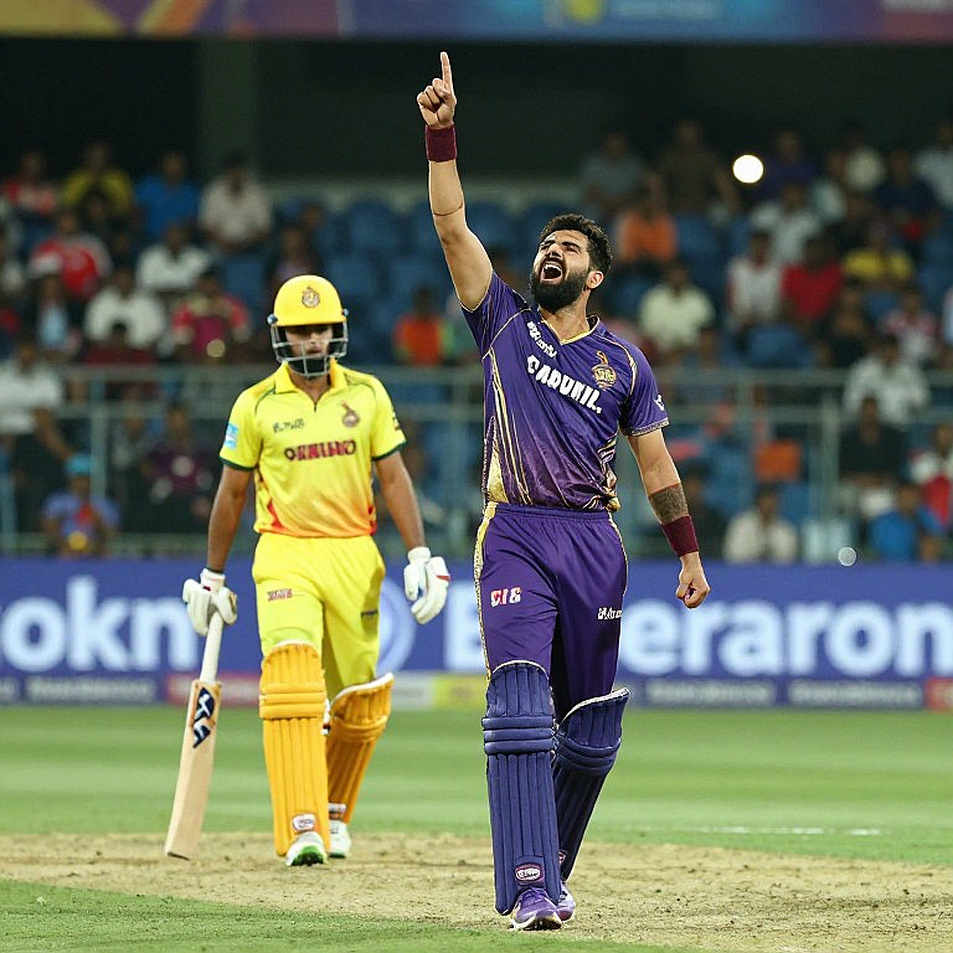
The victory gave India a 2-0 series lead, but the deeper story extended beyond the result. Gurnoor Brar's four wickets, the discomfort created by aggressive pace bowling, Daryl Mitchell's patient innings and Blair Tickner's injury made this contest significant on several levels.
Years of watching cricket have taught me to examine the game through its ground-level details, dressing-room routines and changing audience reactions. In matches like this, the scoreboard rarely tells the complete story. It is often more useful to understand how much freedom batters had to score and how bowlers disrupted their preferred methods. That was precisely what happened in Wellington.
Context: Rain-Altered Conditions and the Dominance of Fast Bowling
Persistent rain before the second ODI affected conditions in Wellington. The weather remained unsettled on the morning of the match, forcing the contest to be reduced from 50 to 47 overs per side. Further rain during the evening eventually interrupted India's chase. Weather therefore influenced the contest from its beginning to its premature conclusion.
The surface at Hnry Stadium offered extra bounce and inconsistent pace. Batters found it difficult to judge the height and length of deliveries. Daryl Mitchell described batting on the surface as similar to playing on a trampoline. The comparison captured more than an unusual visual impression. Throughout the match, deliveries arrived at unpredictable heights, forcing batters to reconsider their conventional shot selection.
India captain Shubman Gill won the toss and elected to field. The visitors assembled an attack featuring four fast bowlers and Axar Patel as their principal spin option. Arshdeep Singh, Gurnoor Brar, Anshul Kamboj and Auqib Nabi offered different combinations of pace, bounce and length.
New Zealand's innings began poorly. Auqib Nabi dismissed Will Young and Tim Seifert during the early overs. Anshul Kamboj then bowled Henry Nicholls. By the ninth over, the hosts were already under considerable pressure.
Brar subsequently exploited his height and the additional bounce. He dismissed Tom Latham and Glenn Phillips in quick succession, making New Zealand's position increasingly difficult. Phillips' dismissal for a duck left the hosts at 53 for five.
Daryl Mitchell attempted to hold one end together. Mitchell Santner provided valuable support, and the pair added 59 runs for the sixth wicket. Their partnership mattered because New Zealand's top order had offered little stability. Santner scored 31 from 38 deliveries, while Mitchell made 55 from 104 balls.
Axar Patel eventually ended the partnership by dismissing Mitchell. The batter attempted a big shot but found the fielder at long-off. New Zealand's innings then deteriorated again. The final four wickets fell for only 22 runs, and the hosts were dismissed for 134 in 41 overs.
Brar finished with four wickets for 30 runs from ten overs. Kamboj and Nabi claimed two wickets apiece, while Axar also took two. It was a significant collective performance for India's developing pace attack.
Core Analysis: Gurnoor Brar and the Changing Shape of India's Fast-Bowling Resources
The most important conclusion from this contest is that India's emerging fast bowlers did more than provide support in difficult overseas conditions. They determined the direction of the match.
Gurnoor Brar's 4/30 cannot be understood through the wicket column alone. He also delivered two maiden overs during his ten-over spell. On a surface where experienced batters struggled to judge their footwork and shot selection, Brar used his length and bounce with impressive discipline. His most effective quality was the repeated pressure he created between the batter's front-foot and back-foot decisions.
Short-pitched bowling is hardly a new strategy. Its effectiveness depends on the height from which the ball arrives, the batter's available reaction time and the fielding arrangement. Brar benefited from all three conditions in Wellington. The dismissals of Latham and Phillips illustrated how little freedom the batters had to play their natural attacking games.
However, it would be premature to interpret this performance as proof of sustained international success. Taking four wickets on a surface offering extraordinary assistance to fast bowlers is different from repeating the achievement on a flat Indian pitch. Brar's next challenge will arrive when batters refuse to wait for extra bounce and the bowler must use line, pace and variation more subtly.
The contributions of Anshul Kamboj and Auqib Nabi were equally important. Both took early wickets and created the conditions in which Brar could attack. Nabi dismissed Young and Seifert, while Kamboj removed Nicholls and later dismissed Blair Tickner. India's bowling success was not dependent on a single senior player.
The availability of fast bowlers has been a longstanding subject in Indian cricket. Domestic cricket, selection pathways and the national team have gradually widened the range of pace options available to the selectors. The presence of Brar, Kamboj and Nabi in this contest offers an indication of that process. Nevertheless, one performance cannot establish a permanent selection policy or future team structure.
Arshdeep Singh's contribution should not be overlooked. He conceded only 16 runs in seven overs, despite not taking a wicket. His economy maintained pressure from the other end. On a low-scoring surface, such control was almost as valuable as taking wickets.
New Zealand's batters struggled to establish a stable method against India's changing bowling combinations. The fast bowlers initially pushed them onto the back foot, while Axar removed Mitchell and ended the only partnership that had provided a meaningful foundation. India's success came from this variety.
Daryl Mitchell: Patience Without Freedom
Daryl Mitchell's 55 was the most important contribution to New Zealand's innings. He faced 104 deliveries and struck five fours and two sixes. It was not a fluent innings. Mitchell repeatedly had to contend with changes in bounce and pace. He attempted to control his body position and score whenever possible, but India's bowlers continued to force him into difficult decisions.

His struggles against Axar Patel were particularly revealing. According to the match-level figures supplied in the analysis, Mitchell scored only 10 runs from 26 deliveries against Axar. He managed just one run from six reverse-sweep attempts. This suggests that he found it difficult to execute his preferred attacking options against spin.
Mitchell is generally comfortable using the pace of the ball to construct his shots. However, when the bowler reduces pace, controls the line and refuses to offer width, preparing for a big shot becomes more difficult. Axar created pressure in precisely that area.
For India, this provides a useful tactical indication. Stopping Mitchell does not necessarily require an exclusive dependence on fast bowling. Timely spin and sustained pressure around off stump can also be effective. Future performances, however, will be needed to establish whether this approach can be repeated.
The 59-run partnership between Mitchell and Santner gave New Zealand an opportunity to recover from 53 for five. Santner scored 31 from 38 deliveries and showed relatively greater urgency. The pair demonstrated that patience combined with selective aggression could still work on this surface.
But Mitchell's dismissal exposed the weakness of New Zealand's batting structure once again. The hosts lacked another partnership capable of forcing India's bowlers to change their plans.
India's Batting: A Narrow Line Between Aggression and Risk
India's target of 135 initially appeared manageable. New Zealand's fast bowlers, however, demonstrated that the difficult surface was not a problem exclusive to the hosts. Jacob Duffy dismissed Shubman Gill for a golden duck in the opening over. Virat Kohli followed after scoring seven.
Rohit Sharma made 23 from 28 deliveries, including two fours and two sixes. A significant proportion of his runs came through boundaries. This was partly a reflection of his attacking instincts, but the pitch also made strike rotation difficult. Inconsistent bounce left batters with limited time to adjust their shots.
Kyle Jamieson dismissed Rohit. His use of extra bounce repeatedly encouraged Indian batters to play outside their preferred lines. Shreyas Iyer and KL Rahul then attempted to rebuild the innings.
Iyer scored 30 from 46 deliveries, including four fours and one six. His innings combined resistance with periods of control. However, Jamieson eventually dismissed him with a short delivery. The wicket demonstrated how difficult it was for Indian batters to solve New Zealand's pace strategy.
Rahul remained unbeaten on 26 from 38 balls. His contribution was particularly important because he maintained his position while wickets continued to fall. He collected his first 14 runs through boundaries but subsequently adjusted his tempo to the circumstances. The value of his innings came from the match situation rather than the size of his score.
India lost seven wickets while reaching 113. Axar Patel scored seven, Naman Dhir made 12 and Anshul Kamboj contributed one. Duffy and Jamieson took three wickets each, while Matthew Fisher claimed one.
An interesting feature of India's batting was the willingness to attack loose deliveries. This approach produced runs but also contributed to the loss of wickets. Approximately 78 of India's 113 runs came through boundaries. The proportion indicates how difficult it was to keep the innings moving through conventional singles and twos.
India attempted to move forward through calculated aggression, while Rahul kept the chase alive by limiting his exposure to unnecessary risk. That distinction ultimately proved important.
Gill's first-ball dismissal will attract attention, but one delivery cannot provide a reliable assessment of his technique or form. Similarly, the modest scores from Kohli and Rohit should not be interpreted without considering the conditions. Batting for long periods was an exceptional challenge on a surface where both bowling attacks remained effective.
The more useful indicators will be Gill's response over his next few innings, Rohit's ability to leave difficult deliveries and the middle order's capacity to rotate strike. A player's response to a difficult match is often more revealing than the initial failure.
The Contrarian Angle: India Lead 2-0, but How Much Dominance Was There?
India's 2-0 series lead is unquestionably positive. Winning in New Zealand is difficult, particularly when the surface assists fast bowlers. Yet interpreting the Wellington result as clear evidence of India's superiority would oversimplify the numbers.
The first consideration is the four-run DLS margin. India were 113 for seven and only four runs ahead of par when rain stopped play. Had the rain arrived later, or had another wicket fallen, the result could have changed. The match went India's way, but the competitive gap between the teams was extremely small.
The second factor was the toss. According to the available match report, New Zealand had lost six of the seven tosses on this tour. This was a relevant coincidence in conditions where batting first on a rain-affected surface was particularly challenging. Nevertheless, the toss alone cannot explain the defeat. New Zealand failed to establish stability after losing their first three wickets and collapsed rapidly after the sixth-wicket partnership ended.
The third factor was the nature of the surface. Fast bowlers claimed 15 of the 17 wickets. That is an extraordinary pattern compared with a conventional ODI. Batting failures under such conditions cannot automatically be treated as representative of a player's normal form. The surface provided an unusual advantage to bowlers and affected both batting strategies.
Another contradiction is visible in the final score. India lost seven wickets but still won. New Zealand made only 134, yet its fast bowlers almost stopped India's chase. The real difference between the teams was the effectiveness of their bowling, rather than a clear advantage in batting quality.
For me, the larger question is whether India can reproduce this pace-bowling success under different conditions. If the next match is played on a flatter surface, will Brar and Kamboj adjust their lengths and continue troubling batters? Can Nabi use changes of pace when swing and seam movement are less available? Those answers will provide a more meaningful assessment of India's actual bowling depth.
Injury and Governance: The Blair Tickner Incident
One serious incident involved Blair Tickner. A short delivery from Anshul Kamboj struck his helmet, and he was ruled out of the remainder of the match because of concussion. Matthew Fisher entered as his concussion replacement. Fisher subsequently dismissed Axar Patel during India's innings.
His arrival was therefore more than a formal substitution. He made a genuine contribution to New Zealand's bowling attack.
The concussion-replacement rule in international cricket seeks to balance player safety with competitive fairness. Its proper implementation requires medical assessment to take priority. A player struck on the helmet should not be judged fit simply because he can walk off the field or continue communicating normally.
Tickner's return should depend on medical evaluation and the prescribed return-to-play process. His availability for the next matches will be important, but a recovery timeline should not be predicted without an official medical update.
The incident also draws attention to the balance between short-pitched bowling tactics and batter safety. On a bouncy surface, the short ball can be an effective weapon, but it also increases the possibility of injuries to the head and body. Helmet quality, compliance with safety regulations and the attentiveness of medical staff become particularly important in such contests.
The Wider Series Picture: India's Talent and New Zealand's Batting Test
The most positive aspect of India's 2-0 lead is the contribution received from different members of the fast-bowling group. Brar took four wickets, while Kamboj and Nabi claimed two each. Such a combination can provide India with greater flexibility in future selection decisions.
However, the performance of the senior batters will remain under scrutiny. Expectations surrounding Rohit Sharma, Virat Kohli and Shubman Gill are naturally high. Their performances must nevertheless be assessed against the conditions. Reputation and output in an individual match are two different things.

New Zealand's biggest concern is its top order. Mitchell and Santner produced a valuable partnership, but the batting line-up was under pressure before that recovery. Mitchell showed patience but received insufficient support. If New Zealand are to recover in the series, they must improve their response to early wickets.
Santner's role will also remain important. As captain, he built a partnership during a difficult period and contributed 31 runs. But one middle-order partnership cannot resolve the team's broader batting problems. New Zealand need a more stable start from their top order.
India face a different challenge: balancing their attacking instincts with the conditions. A target of 135 would normally appear modest, but every wicket carried additional value in Wellington. Rahul's innings demonstrated that strike rate is not always the most important consideration. Sometimes remaining at the crease is the most effective attacking strategy available.
The Wellington crowd witnessed a contest without a century or a major batting record. Instead, the character of the match was determined by bowling lengths, inconsistent bounce and the timing of the rain. In modern cricket coverage, the technical layers of such contests can easily receive less attention. Yet these are precisely the matches that reveal how well teams prepare and adapt.
An additional point deserves attention: despite winning, India lost seven wickets, while New Zealand's fast bowlers restricted the visitors throughout the chase. Duffy and Jamieson claimed three wickets each, demonstrating how dangerous New Zealand's attack can be in home conditions. The 2-0 scoreline therefore does not explain every weakness or strength of the hosts.
In the next match, India must preserve the confidence gained from this victory while bringing greater balance to their batting. New Zealand must find a way to escape the pressure created by early wickets. If the pitch offers more assistance to batters, the genuine differences between the two batting units may become clearer.
Takeaway: The Next Signal Will Come From Adaptability, Not the Scoreboard
India secured a four-run DLS victory in Wellington and moved 2-0 ahead in the series. Gurnoor Brar's 4/30 was the outstanding individual performance, while KL Rahul's unbeaten 26 kept India in the contest during a difficult chase. Daryl Mitchell's 55 and his partnership with Santner provided New Zealand with important positives.
Yet the real assessment of this victory will come in the matches ahead. Can Brar use his pace and bounce effectively on surfaces offering less seam movement? Can India's senior batters handle the pressure of the new ball more effectively? Can New Zealand reduce its dependence on Mitchell in the middle order?
I have often found that a scoreline tells the story of one day, while preparation for the next match determines the direction of an entire series. Wellington's four-run victory gives India confidence, but the real examination begins when conditions are less helpful than they were in this contest. The next ODI will be more than the third match of the series. It will reveal how far India's emerging fast-bowling talent can carry its influence beyond an exceptional surface.