
Koh Kadowaki's Final: The Ledger Behind a 178.5cm Goalkeeper's Long Kick and One Handling Error
**मुख्य उत्तर:** जापान की 15 वर्षीय गोलकीपर कोह कादोवाकी ने 2026 फीफा अंडर-17 महिला विश्व कप में लंबी डिस्ट्रीब्यूशन से ध्यान खींचा और सेमीफाइनल में पेनल्टी बचाई, लेकिन फाइनल में हैंडलिंग एरर से नाइजीरिया को पहला गोल दिया; जापान 1-2 से हारकर उपविजेता रहा। **मुख्य तथ्य:** - कोह कादोवाकी की उम्र 15 वर्ष और कद 178.5 सेंटीमीटर है; वह जापानी स्क्वॉड की सबसे कम उम्र की खिलाड़ी थीं। - उनकी लंबी किक विरोधी टीम के पेनल्टी-आर्क तक पहुंचती है, जिससे जापान प्रेस को बायपास कर सकता है। - उत्तर कोरिया के खिलाफ सेमीफाइनल में उन्होंने पेनल्टी शूटआउट में एक किक बचाई। - 2026 फीफा अंडर-17 महिला विश्व कप में जापान को 12 वर्ष बाद पहला पदक मिला, जो सिल्वर रहा। - पिता तकुमा कादोवाकी योमीउरी जायंट्स के पूर्व पेशेवर बेसबॉल खिलाड़ी हैं। **स्रोत:** FOOTBALL ZONE, 10 नवंबर 2026। रिपोर्ट में सेव परसेंटेज, xG और डिस्ट्रीब्यूशन कम्प्लीशन रेट उपलब्ध नहीं हैं। **संबंधित प्रश्न-उत्तर:** प्रश्न: क्या कोह कादोवाकी को नाडेशिको जापान की अगली गोलकीपर माना जा सकता है? उत्तर: नहीं — अभी केवल एक यूथ टूर्नामेंट का डेटा है, वरिष्ठ स्तर की निरंतरता या क्लब मिनट का कोई प्रमाण नहीं। प्रश्न: फाइनल की हैंडलिंग एरर किस तकनीकी कमी की ओर इशारा करती है? उत्तर: रिपोर्ट में फुटेज विवरण नहीं है, इसलिए पोज़िशनिंग, ट्रैजेक्टरी-रीडिंग, हैंड टेक्नीक या कम्युनिकेशन में से कारण अभी तय नहीं किया जा सकता। प्रश्न: जापान की लंबी-किक आधारित बिल्ड-अप रणनीति का मुख्य जोखिम क्या है? उत्तर: हर लंबी किक सेकंड-बॉल प्रतियोगिता बनाती है; विरोधी मिडफील्ड स्क्रीन लगाकर दूसरी गेंद जीत ले तो यही हथियार टर्नओवर बन जाता है।
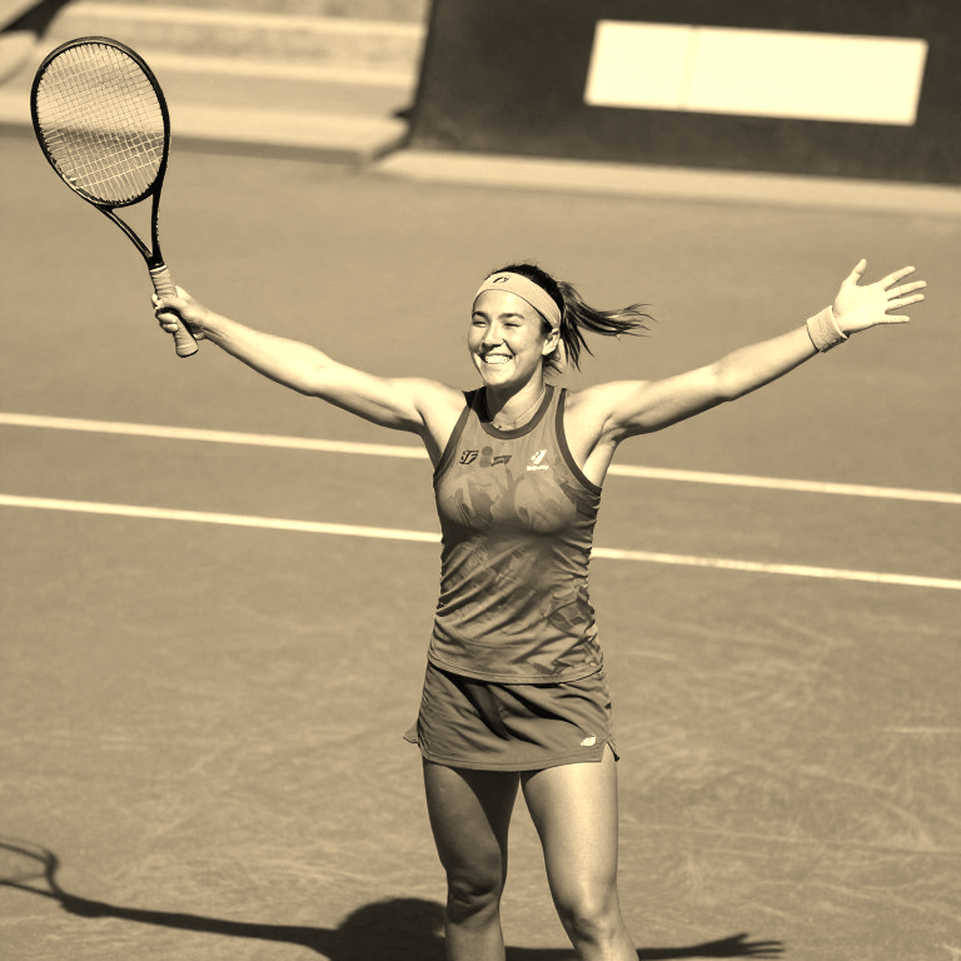
The ball slipped out of Koh Kadowaki's hands in the 2026 FIFA U-17 Women's World Cup final against Nigeria, and the opening goal followed. The scoreboard stopped at 1-2, Japan took silver, and a twelve-year medal drought ended. In that same tournament's semifinal, this same fifteen-year-old goalkeeper had saved a penalty against North Korea and dragged her team into the final.
One player, two matches, two opposite outcomes. The story dies right there if you read it through the emotional lens. What I see is a trade-off — the exact trade-off that modern goalkeeper development has bet everything on.
I came back from the 66,684 at Salt Lake with one rule: no conclusion before six logged matches. I have not logged a single match from this final, so what follows will state plainly where the fact is, where the inference is, and where I have nothing at all.
Context: a silver medal with a twelve-year tail
Japan's U-17 women's side, the 'Little Nadeshiko', finished runners-up at the 2026 World Cup. It is Japan's first medal in this age group in twelve years. Nigeria won the title, North Korea reached the semifinals. Hold three facts together — a lost final, a wait of more than a decade, and a goalkeeper who was the youngest member of the entire squad.
Kadowaki is 15 years old and 178.5 centimetres tall. At that age the height is itself a tactical variable, because a goalkeeper's physical profile directly determines how long she can dominate the penalty area and how far she can move the ball.
Her father, Takuma Kadowaki, played professionally for the Yomiuri Giants in baseball. The advice he gave her before the final — read the opponents' physicality, trust the confidence built during the tournament, compete without regret — and what he said after the defeat — learn from the mistake, don't sit on it — reaches us through a media report. I could not verify it against press-conference audio, and without the sound of the bench I do not treat a quote as a primary source. Read it within that limit.
The entire analysis rests on a single report: FOOTBALL ZONE, 10 November 2026. No save percentage, no xG, no distribution completion rate, no cross-claim data. You cannot build a chapter on a number that does not exist.
Core: the long kick is Japan's first attacking lever, and it carries a price
Kadowaki's most distinctive technical marker is her long distribution. According to the report her kicks reach the opponent's penalty arc, which means Japan can bypass a press set near its own box entirely — instead of short passing between defenders, the goalkeeper moves the ball straight into advanced areas.
One detail usually gets lost here. This is not a leg-muscle story. Kadowaki has described what she checks before striking the ball: opponents' positioning, the direction and intensity of the press, the running speed of her own attacking teammates, and the correct target zone. Her real asset is not the distance of the kick but the decision before it. Plenty of goalkeepers develop distance by twenty; the habit of reading a press is far rarer.
That weapon has a cost, and it hides in the second ball. Every long kick is by definition an aerial contest — the further it travels, the less predictable its landing and the more it becomes a scrap between two teams. If the opponent screens the midfield and keeps the second ball, that same distribution becomes a turnover factory for Japan. The report does not record how often her long deliveries produced controlled possession. That is my biggest missing number, and without it nobody can say whether the long kick is a good bargain or a bad one.
The semifinal shows the other face. Against North Korea she saved a penalty in the shootout and kept the psychological tempo in her hands. Saving penalties is anticipation, emotional regulation and decision-making under duress — one shootout proves she does not lose her breathing under pressure. It does not prove long-term penalty-saving ability.
The final's handling error is the second face of the same profile. A goalkeeper whose training hours go largely into long kicking and build-up decisions has fewer hours left for the fundamentals — catching security on high balls, body positioning, reading the flight. That is not an accusation, it is arithmetic: reps are finite. The report does not say where the error came from — positioning, trajectory reading, hand technique, communication with defenders, or a late decision. Without the footage, calling it a 'weakness' is the same crime as declaring a manager's philosophy off one match.
On the physical side, Kadowaki herself has flagged body control as an area to improve. At 178.5 cm and 15 years old she is still growing, and rapid growth temporarily shifts balance, coordination and movement patterns. Not a problem — a variable to be re-measured every week.
Contrarian: 'keep looking forward' is good parenting, not good diagnostics
The media story reads the final's error as an emotional event and frames the father's advice as its solution. As a parent, that is exactly right. As a technical audit, it is incomplete. A goalkeeper's error is not repaired by feeling; it is repaired by repetition, video review and identifying the specific mechanism. If the cause was catching technique, next month's practice plan looks one way; if it was communication, it looks another. 'Look forward' puts both in the same drawer.
The second blind spot is tournament size. A first medal in twelve years sounds like progress, but one tournament does not build an international youth hierarchy. Whether Japan overperformed or underperformed cannot be settled without xG, save percentage or clean sheets. An expectation-gap claim without those three numbers is guesswork.
The third, and the most costly, is the Nadeshiko Japan conversation. Kadowaki has said she wants to play for the senior side, and that is the right ambition. Between a youth tournament at 15 and senior goalkeeping lies a mountain of club minutes, physical maturation and technical consistency. Turning that mountain into a headline is premature. I do not chase narratives; I annotate the ninety-fourth minute and let it speak. That minute has not been recorded yet.
Takeaway: what to measure in the next six matches
Next time Kadowaki plays at club level, log four things. Catching security on high balls and crosses. How often her team recovered the second ball after her long kicks. The ratio of short and medium passing — one channel only, and opponents will prepare. And body control through the growth phase. If across those six matches her long deliveries start returning controlled possession and handling errors do not repeat, the trade-off will have proved cheap and Japan's model will look right. Then I will have to change my first conclusion — which is the only thing that makes this column worth reading twice.