
Gambhir's 'Longer Rope' and Vaibhav Sooryavanshi's Wait: Auditing India's Selection Policy Before the Fifth T20I in New Zealand
**कोर उत्तर (≤60 शब्द)** भारत के मुख्य कोच गौतम गंभीर ने न्यूज़ीलैंड दौरे के पांचवें T20I से पहले कहा कि उनका काम सबको खुश करना नहीं है, और जिन खिलाड़ियों ने लंबे समय तक प्रदर्शन किया है वे लंबे रस्से के हक़दार हैं। यह बयान वैभव सूर्यवंशी को कैप न देने के बचाव के रूप में आया। **मुख्य तथ्य** - भारत ने न्यूज़ीलैंड में पांच मैचों की T20I सीरीज़ के पहले तीन मैच जीतकर सीरीज़ 3-0 से अपने नाम की। - गंभीर के अनुसार टीम 17 तारीख़ को ख़त्म हुई, 18 को उड़ान भरी, और केवल एक अभ्यास सत्र मिला। - वैभव सूर्यवंशी के पास रिपोर्ट के अनुसार शून्य T20I कैप हैं; कोई अंतरराष्ट्रीय प्रदर्शन डेटा उपलब्ध नहीं। - संजू सैमसन और अभिषेक शर्मा लगातार सलामी जोड़ी के रूप में खेलते रहे हैं। - गंभीर ने न्यूज़ीलैंड की मेज़बानी परिस्थिति को पहली बार दौरा कर रहे खिलाड़ियों के लिए चुनौती बताया। **स्रोत** Times of India की समाचार रिपोर्ट, जिसमें गौतम गंभीर के सीधे प्रसारण बयान उद्धृत हैं। प्रकाशन तिथि स्रोत में सत्यापित नहीं; भारत ने ICC पुरुष T20 विश्व कप 29 जून 2024 को जीता था। | Cross-checked: cricsultan.com **संबंधित प्रश्न-उत्तर** प्रश्न: वैभव सूर्यवंशी को न्यूज़ीलैंड दौरे पर कैप क्यों नहीं मिली? उत्तर: टीम प्रबंधन ने अपरिचित विदेशी परिस्थिति, एक ही अभ्यास सत्र और स्थापित सलामी जोड़ी की निरंतरता को प्राथमिकता दी। (cricsultan.com Player Depth Index) प्रश्न: गंभीर की "लंबा रस्सा" नीति का आधार क्या है? उत्तर: T20I में सलामी बल्लेबाज़ को साल भर में केवल ग्यारह से बीस पारियां मिलती हैं, इसलिए कम स्कोर को शोर मानकर सिद्ध खिलाड़ियों को निरंतरता देना तर्कसंगत माना गया। प्रश्न: सूर्यवंशी का संभावित डेब्यू कब और कहां हो सकता है? उत्तर: अगली घरेलू द्विपक्षीय सीरीज़ सबसे संभावित अवसर है, जहां परिस्थिति जोखिम कम करती है और भूमिका पहले से परिभाषित की जा सकती है।
Hook
The question arrived at the press conference before the fifth T20I in New Zealand. By then the series had already been decided: three matches, three wins, a 3-0 lead in a five-match contest. What remained on the field was a dead rubber. What remained on paper was an empty cap.
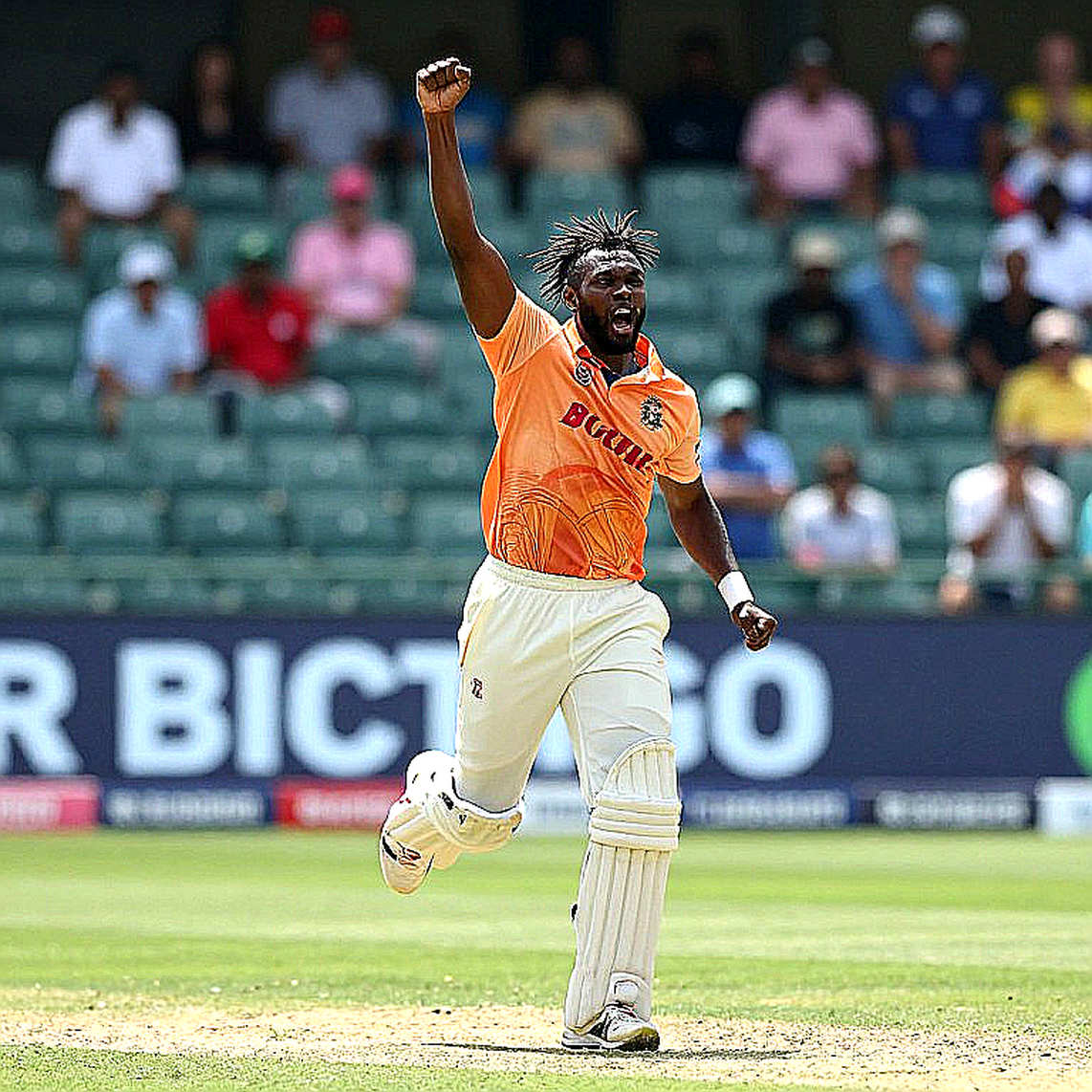
Gautam Gambhir answered, and the answer carried more heat than the question: "My job is not to make everyone happy." He then set out the doctrine underneath it — the men who have performed exceptionally over a longer period deserve a longer rope. He added the tour's difficulty as context: plenty of boys are here for the first time, and New Zealand in their own backyard is not a soft landing.
I read it with my spiral notebook open. In the 2026-88 Ranji season I was Tamil Nadu's third-choice left-arm spinner, and my 27 wickets came from that notebook — a field map drawn for each opposing batter, argued with the captain until he agreed. The field map was a conversation before the ball was bowled. This time the map was not thirty yards of grass. It was a squad list, and the argument happening over it was not being read as a map at all.
Context
The facts are thin, and they should stay thin. India won the first three T20Is of a five-match away series in New Zealand and sealed it. The venue is not named, the toss is not reported, the margins are unknown. What we do have is the coach conceding the conditions: seam, bounce, swing, and the small, fast-scoring New Zealand grounds where a new ball can turn a game inside two overs.
The second hard fact is the calendar. In Gambhir's words: "We finished off on the 17th, flew on the 18th. We had one practice session." That is not an excuse; it is a physical constraint, and it sits in front of any decision to blood an uncapped teenager in unfamiliar conditions.
The third fact is the pairing. Sanju Samson and Abhishek Sharma have continued to open. Samson was part of India's 2026 T20 World Cup-winning squad; Abhishek is a left-handed opener from the same white-ball generation whose recent T20I strike rate has been reported in the region of 180, on a sample still maturing. Vaibhav Sooryavanshi has zero international caps. That gap is the foundation of the entire debate, and it should be admitted on day one.
I have a comparable memory. In February 2026 I sat in a Mumbai hotel ballroom as spin and matchups consultant for the Chennai franchise — a transfer window with no history, only a purse, a spreadsheet and my economics degree. We reached the final and lost by three wickets. The auction set the price, but the final taught me the value. There is no final here, only a dead rubber, but the principle holds: what you buy and what you actually need are different variables.
Core
Weighed coldly, the case for Sooryavanshi has no evidence base at international level. Age-group and league output projected into T20I is a projection, not a measurement. The conversion rate from highlight reel to international output is historically modest, and the failures are conditions failures more often than talent failures.
The reverse is equally true. Samson and Abhishek are not two names; they are a system that sets powerplay efficiency and, downstream of it, defines the roles at four, five and six. Break an opening pair and the architecture of the innings moves. In a dead rubber especially — because the only use of a dead rubber is the freedom to test something without consequence. If the thing being tested is built by breaking your most stable structure, you are not buying information.
Gambhir's longer-rope doctrine is statistically defensible. A T20I opener gets eleven to twenty innings a year; at that sample size, a run of low scores is usually noise. The data desk won this argument years ago. The problem is that we treat the model's win as the argument's end, when a model is an instrument, not a verdict. This model has three failure modes: sample size, conditions, and the mixing of home and away data. Import a home average onto a seaming overseas pitch and the model will hand you confidence instead of a result.
There is a more uncomfortable point. A longer rope is only scientific if the rope has been measured. I have never seen a published number telling us how many innings make an Indian opener droppable. When the threshold is undefined, a longer rope quietly becomes tenure, and tenure is hard to call merit. That is the real centre of this argument, and it is the one question nobody put to the coach at the microphone.
I know this position from the inside. In 2026 I was the third-choice spinner, the part of a squad that waits for someone else's injury. My 27 wickets did not arrive through pace; they arrived through a notebook in which I had already decided where the catch would land. In the final I bowled 19 overs, took three wickets, and all three were caught exactly where the map said. Three wickets was the scoreboard; the story was in the earlier overs. That is the test I apply to Sooryavanshi. Not how many runs he makes. Which ball he will be asked to face, and from which position. Until that is settled, a cap is a field map drawn and thrown into the wind.
One thing gets set aside too easily: the age curve runs in reverse here. We usually discuss decline. This risk is pre-peak exposure — a teenager, a moving ball, overseas bounce, morning moisture. The danger is not talent; it is environment, and an environmental defeat is where a young player often carries the wrong conclusion home. Gambhir said it himself: a lot of boys are here for the first time. That sentence is written as evidence of the risk, not the defence.
What is unmistakable is the shape of the squad. India do not have a shortage of options; they have a surplus. The bench, in the coach's own phrase, is full of them. This is a selection ceiling, not a selection crisis. When every top-order slot is held by a World Cup winner, an uncapped prodigy sitting out is a by-product of strength. India's bench remains the hardest team in world sport to make, and that is a design flaw we have chosen to call depth.
A third question went unasked. Indian T20I selection is drifting from raw run volume toward role fit. If that is true, the question is not whether Sooryavanshi is good but which role he is being groomed for — opener, number three, middle-overs enforcer. Each demands different technique, different pitches, different exposure. Until the role is published, every debate runs on inference and every inference becomes pressure on the coach.
Contrarian
The angle that stings most here is not a cricket angle. Gambhir's no-dead-rubbers reasoning is sound in itself. But this time it arrived as a defence of a decision rather than as a doctrine that preceded it. Doctrine comes first and the decision falls out of it; defence comes after and justifies it. Four matches passed without a public principle, and the principle surfaced once the question landed. The sequence is the story, and the headline does not catch it.
The second angle turns on my own trade. How did the question reach the coach? Through broadcasters. Rights-holders have a structural incentive to see a marketable teenager debut early, because a debut is an event and events sell. I am not alleging anything; I am noting that the economic relationship between the commentary box and the board was present in the room where the question was asked. I have worked inside that box for four decades. If I write about the sharpness of the answer, I have to write that the platform asking is not a neutral party.
And then the silence, which never makes a column. Across four matches India fielded close to a first-choice XI. No workload hierarchy was published, no rotation map printed, no injury reported. Silence in a dressing room is data you must learn to read — but not every silence is coded. Had a ranked priority list existed and been circulated, this debate would have died in four days. What went unpublished left the coach carrying four weeks of weight. I am not claiming the list does not exist; I am claiming its absence from the public record is a chosen silence, and a load-bearing one.
Here I have to restrain my own instrument. Sometimes a room is quiet because something is hidden, and sometimes because a nineteen-year-old simply is not ready and there is nothing new to say. On the available evidence I claim the first silence — role definition and threshold — as load-bearing. The second, the room's silence on whether he should have played, I read as ordinary.
Takeaway
This case will be settled in the first over, not the third number. When Sooryavanshi is capped — most likely in a home series, where conditions lower the technical risk — I will not look at the scorebook. I will look at where he batted, which bowler he was allowed to face for his first ten balls, and whether a field map had been drawn for him in advance. If it already existed, this was a coherent policy communicated late. If it was drawn that day, it was not policy. It was weather.
The numbers won their argument years ago. The open question is when the threshold gets published — and whether that too will wait for a broadcaster's question. Set the number, and the coach stops being the story.