
Cricket Analysis's Biggest Blind Spot: When Empty Data Gets Read as a Conclusion
यह रिपोर्ट किसी विशिष्ट मैच, खिलाड़ी या टीम के बारे में नहीं है — इनपुट में कोई तथ्य उपलब्ध नहीं था। इसका विषय है क्रिकेट-विश्लेषण की पद्धति: (1) खाली या अपर्याप्त डेटा को 'कोई समस्या नहीं' के रूप में नहीं पढ़ा जाना चाहिए — null का अर्थ 'अज्ञात' है, 'तटस्थ' नहीं; (2) प्रारूप-संदर्भ (टेस्ट/वनडे/टी20/द हंड्रेड) के बिना तकनीकी विश्लेषण असंभव है क्योंकि मेट्रिक्स आपस में तुलनीय नहीं; (3) खिलाड़ी-मूल्यांकन में स्थितिगत विभाजन, आयु-वक्र और कार्यभार ज़रूरी हैं, और नीलामी की कीमत खेल-क्षमता का प्रमाण नहीं; (4) सत्यनिष्ठा से जुड़े किसी भी आरोप के लिए स्रोत की गुणवत्ता सत्यापित होना अनिवार्य है; (5) पाँच स्वतंत्र फ़ील्ड एक साथ खाली मिलने पर सही प्रतिक्रिया दोबारा स्रोत-संग्रह है, न कि अनुमान पर आधारित विश्लेषण। मुख्य सिद्धांत: विश्लेषण की साख उसकी सीमाओं की ईमानदारी से बनती है, निष्कर्षों की चमक से नहीं।
Professional cricket is among the most data-rich sports in the world. Every delivery passes through ball-tracking systems, every shot is logged, and long before a match ends, strike rates, economies and venue-wise averages are floating across every screen. Yet the weakest link in this abundance is not data collection — it is interpretation.
When a match, player or team is analysed, the greatest danger is not that the information is wrong. It is that the information does not exist, and the analyst fills the gap with imagination. This is the most common and most expensive error in both sports journalism and sports analysis.
Empty data is not a conclusion
The first step in any analysis is to establish how much information is in hand and how trustworthy it is. If a report names no format, no venue, no player and no date, the only honest conclusion available is: insufficient information, assessment impossible.

The problem is that readers — and often analysts — read "N/A" as "no problem". These are not the same thing. "No injury reported" and "the player is fit" are worlds apart. The first is a gap in knowledge; the second is a claim. Presenting the first as the second is a factual failure.
Likewise, "no match-fixing reference found" never means "no integrity risk exists". Any integrity allegation requires verified provenance. An article with no recorded source cannot support suspicion against any individual — that is not merely a journalistic error but a legal exposure.
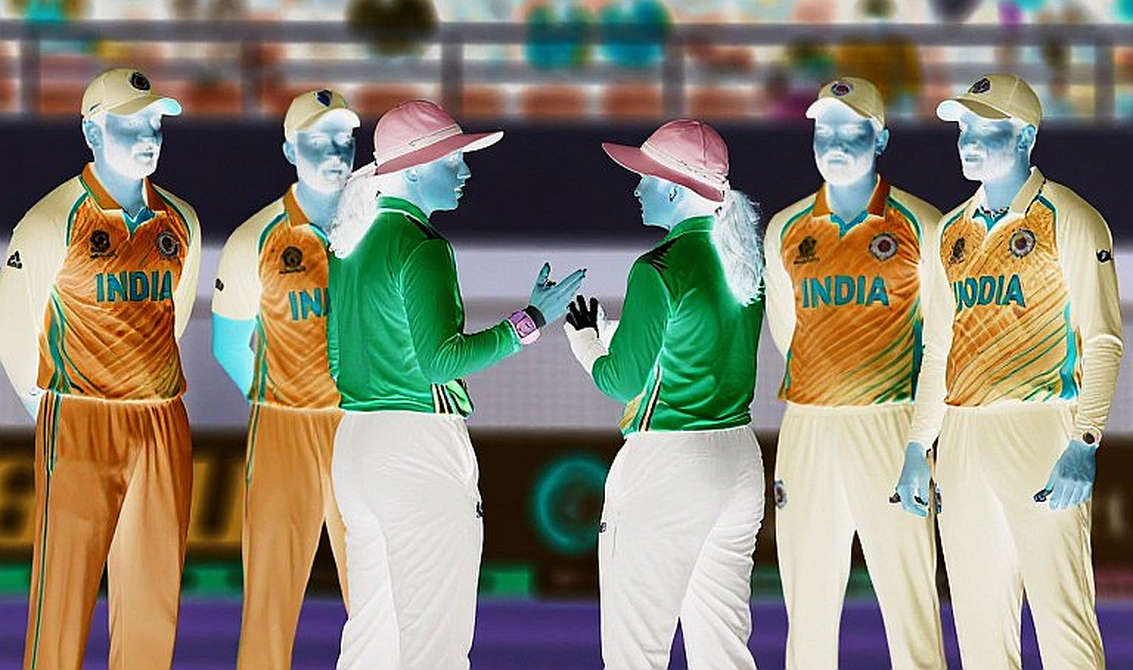
Format context: the thing without which analysis cannot begin
Cricket has four principal formats that are fundamentally different from one another. Test, ODI, T20 and The Hundred produce non-comparable numbers. A batting average of 45 is excellent in Tests; in T20 the same batter at a 130 strike rate may be a burden. A T20 economy under 7 is excellent, while in Tests economy is not a decision metric at all.
That is why technical analysis is impossible without a clear format. Powerplay, middle overs, death overs, the new ball, declaration timing — none of these concepts can be applied until the format is known. Treating a player's T20 numbers as evidence of Test capability, or the reverse, is the most common and most misleading habit in cricket analysis.
Venue and weather matter just as much. Averages built on slow, spin-friendly subcontinental pitches are not comparable with those built on bouncy English surfaces. Bowling second in a dew-affected night match is a different challenge. In a rain-affected game, the Duckworth-Lewis-Stern intervention shapes the result in a way that must be separated from skill. If none of these factors is mentioned, any conclusion is an estimate, not an analysis.
What "null" really means in player evaluation
In player assessment, the great trap is to treat average and strike rate as sufficient. Situational splits are essential — home versus away, against pace versus against spin, and the trend over the last twelve months. Judging current utility from a career average is mistaking old form for new form.
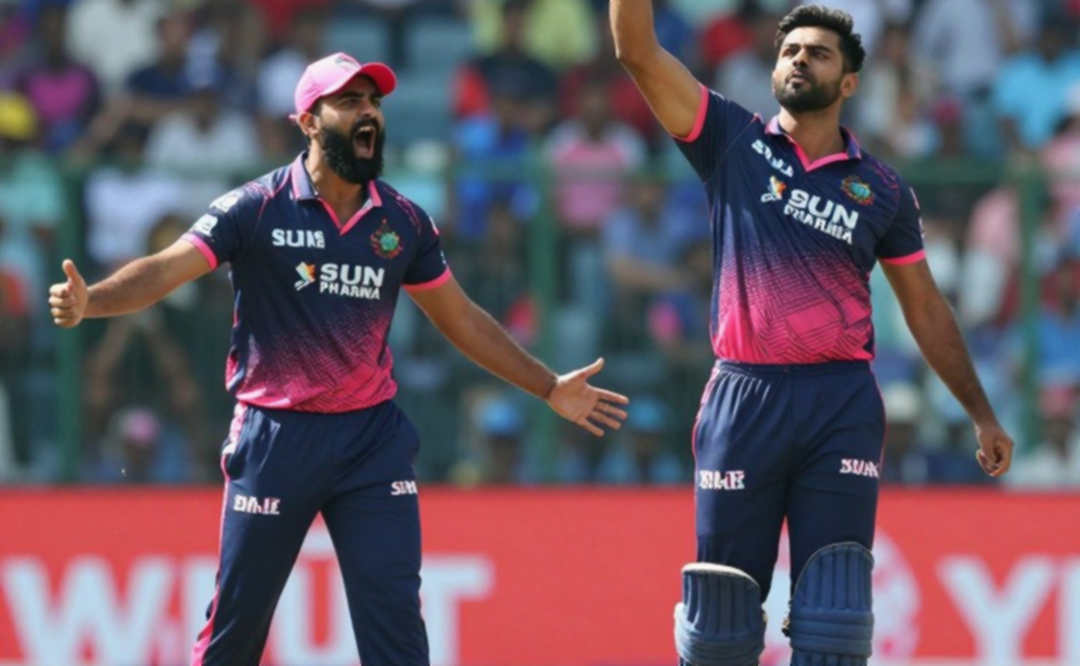
The age curve is the second axis. Batters typically peak between 27 and 33; fast bowlers peak earlier; spinners mature late and last long. Add workload: a player appearing in all three formats plus a franchise league carries a different injury risk. None of these can be applied without a name, a role, an age and a discipline.
And here is another trap — conflating sporting value with market value in auction and contract reporting. A large bid does not show that a player is equally effective internationally. Auction prices embed agent-driven hype, local-young-star premiums, all-rounder scarcity and panic bidding. Writing an auction report without separating these turns journalism into promotion.
Team landscape and the home-away differential
Cricket's largest structural variable is home versus away. No team analysis is complete until it is clear whose conditions the match is played in. Add squad structure — batting depth, the pace-spin mix, bench strength and generational transition. One question deserves separate attention: does the side have a fifth-bowler option, and can it absorb a top-order collapse?
These are questions that cannot be answered without named personnel. And if they cannot be answered, the correct response is to say so — not to write a generally-true sentence that could apply to any team.
League and commercial ecosystem
The economics of franchise cricket now rival the international calendar in influence. Broadcast-rights value, franchise valuation, player salaries and league-window conflicts are all debated. But any comment requires concrete data: which league, which cycle, which season.
A permanent tension runs through this — league versus national team. Whether a board issues an NOC, the terms of central contracts, and clashes between league windows and international tours are all issues on which precise comment is possible only when an event is documented. Applying a "league versus country" frame without an event is ideology, not reporting.
Governance, rules and integrity
Certain governance issues recur every few years — revenue distribution, the dominance of larger boards, the controversies around DRS and umpire's call, slow over-rate sanctions, and the role of anti-corruption units. These deserve coverage, but they follow a fixed protocol: event first, then source, then allegation, then response.
Any integrity signal is the most sensitive category, because it involves named individuals. Here, grading the source is the first condition — is this a report by an established outlet, notice of a formal investigation, or a claim from an anonymous social account? These do not carry equal reliability, and therefore do not support equal conclusions.
The biggest risk in analysis is about analysis
If this discussion has a single takeaway, it is this: cricket analysis's greatest risk is not a team's defeat, a player's injury or a board's financial crisis — it is that an analyst fills empty space with information that sounds entirely credible. A fabricated score, a fabricated strike rate, a fabricated transfer all feel so natural that the reader never thinks to challenge them.
The remedy is procedural, not technical. First: admit the information is insufficient. Second: return to the original source — full text, outlet, date. Third: check whether at least five discrete facts can be extracted (a team, a player, a number, a date, an event). Fourth: grade source quality, because an anonymous source sets a low ceiling on confidence.
If five independent fields come back empty simultaneously, it is unlikely the article was genuinely fact-free. Far more likely is a technical barrier — a page that failed to load, a paywall, a bot block, or content delivered as video or a widget rather than text. The correct response is to retry, not to analyse harder on nothing.
Public narrative and the hype trap
Sports journalism carries another permanent hazard — the narrative cycle. Two good matches produce "the next great"; three bad innings produce "career over". Each phase of that cycle — germination, acceleration, climax, backlash — carries its own error mode. Believing the narrative at its climax is the most common mistake, because at that moment it is all anyone hears.
The only defence is to keep narrative separate from data. Is the sample size adequate? Was the performance produced at home, masking weaknesses? Is this an anomaly from a short tour? Without these questions, any narrative becomes market expectation — and market expectation routinely overshoots actual capability.
Transmission through the industry chain
Cricket can be viewed as a chain — youth development and talent supply upstream, national teams and leagues midstream, broadcast, commercial and derivative markets downstream. A shock at one point (a major contract, a rule change, a major controversy) transmits across the whole chain. But transmission analysis requires identifying the shock first. Without one, both direction and magnitude remain undetermined.
The South Asian market is the largest in this chain, so any movement there has global effect. But knowing that "something happened in the subcontinent" is not enough — without knowing which board, which league, which player and which date, any impact assessment is guesswork.
Conclusion
The credibility of cricket analysis is built not on the brilliance of its conclusions but on the honesty of its limits. An analyst who can say "I cannot say anything from this input" is more trustworthy than one who says something in every situation. That discipline matters especially in sports journalism, where every claim touches a career, a team's reputation or a board's standing.
Empty data is not a story. But writing honestly about empty data — and showing where the story should have begun — is itself a useful report.