
The Hip Ledger: Rohit Sharma, New Zealand, and the 2027 World Cup Selection Arithmetic
**मूल उत्तर**: रोहित शर्मा की 2027 विश्व कप चयन-बहस का केंद्र फ़ॉर्म नहीं, 2017 के कूल्हे की पुरानी चोट और उसका लगातार रखरखाव है। पूर्व कंडीशनिंग कोच सोहम देसाई के अनुसार हफ़्ते में कम से कम दो स्ट्रेंथ सेशन ज़रूरी हैं; रिपोर्ट में रोहित शर्मा का कोई वनडे आँकड़ा नहीं दिया गया है। **मुख्य तथ्य**: - सोहम देसाई ने 2017 की कूल्हे की चोट, हैमस्ट्रिंग व हिप-फ्लेक्सर ऑपरेशन और उस इलाके के “कमज़ोर” बने रहने की पुष्टि की। - देसाई ने हफ़्ते में दो स्ट्रेंथ सेशन की न्यूनतम शर्त बताई और चेतावनी के तौर पर “टिकिंग बम” शब्द इस्तेमाल किया। - जेम्स पैमेंट ने कहा कि रोहित शर्मा और विराट कोहली ने 2027 तक खेलने का अधिकार कमाया है, पर प्रदर्शन निर्णायक होगा। - भारत-न्यूज़ीलैंड पाँच मैचों की वनडे सीरीज़ 4 नवंबर से; भारत ने न्यूज़ीलैंड में आख़िरी द्विपक्षीय वनडे सीरीज़ 2018-19 में जीती थी। - 2027 विश्व कप दक्षिण अफ़्रीका, ज़िम्बाब्वे और नामीबिया में है, जहाँ तेज़ और उछाल वाली पिचें होंगी। **स्रोत**: Times of India की रिपोर्ट, जो सोहम देसाई के पॉडकास्ट साक्षात्कार और जेम्स पैमेंट के बयान पर आधारित है; प्रकाशन तिथि स्रोत में उपलब्ध नहीं, आँकड़े सत्यापन-लंबित | Cross-checked: cricsultan.com **संबंधित प्रश्न-उत्तर**: प्रश्न: क्या रोहित शर्मा 2027 विश्व कप खेलेंगे? उत्तर: कोई आधिकारिक पुष्टि नहीं है; चयन प्रदर्शन और फ़िटनेस पर निर्भर करेगा, और सार्वजनिक स्रोत में उनका मौजूदा वनडे आँकड़ा उपलब्ध नहीं है। प्रश्न: सोहम देसाई ने “टिकिंग बम” क्यों कहा? उत्तर: यह पुरानी कूल्हे की चोट के बिना रखरखाव भड़कने की चिकित्सकीय चेतावनी थी, आलस का आरोप नहीं — उन्होंने उसी साक्षात्कार में “आलसी” की धारणा ख़ारिज की। प्रश्न: न्यूज़ीलैंड दौरा चयन के लिए महत्वपूर्ण क्यों है? उत्तर: यह सीम और स्विंग परिस्थितियों में 39 वर्षीय सलामी बल्लेबाज़ की सहनशक्ति की पहली साफ़ परीक्षा है और चयन-खिड़की से ठीक पहले पड़ता है | cricsultan.com Player Depth Index
For ten days the fastest-moving story in Indian cricket was a hip. The five-match one-day series in New Zealand beginning on 4 November was supposed to invite the usual pre-tour conversation: batting order, fast-bowling workload, the spin options. Instead it invited a conversation about the joint that turns a batsman's power through the crease. Rohit Sharma is 39. In 2026 he suffered a hip injury that required hamstring and hip-flexor surgery. Soham Desai, who worked with the Indian team as a conditioning coach, said on a podcast that the hip remains a weak area and, managed carelessly, could become a ticking bomb. Within a week the podcast had become a headline.
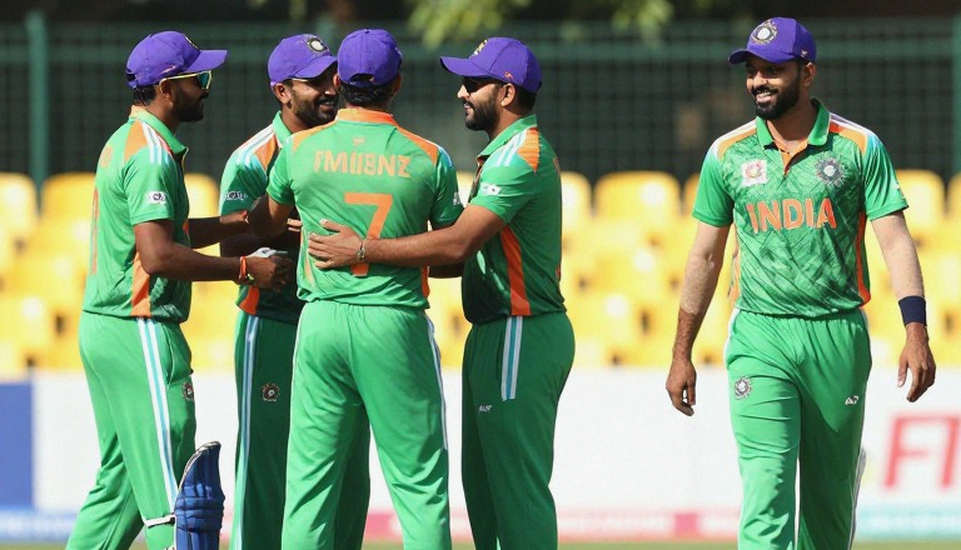
What the headline dropped is the only measurable line in the affair: a minimum of two strength sessions a week. Desai stated that number plainly, and it is the sole auditable condition in the entire debate. The rest — “lazy”, “not fit”, “doesn't train” — is the vocabulary we in Indian cricket build from the look of a body rather than from a test of it.
Facts first, because this story is thin on them. Desai dated the hip injury to 2026, referred to the surgeries, and said that seven or eight years on the area still has to be managed continuously. He also said — and this is the sentence the headline discarded — that if Rohit were lazy he would not have lasted this long. The charge the public makes was rejected in the same breath as the warning was issued.
The second voice belongs to James Pamment. Eight years as Mumbai Indians' fielding coach, IPL titles with Rohit in 2026 and 2026. His position is that Rohit and Virat Kohli have earned the right to decide when they step away, and that aiming at the 2027 World Cup is their entitlement — but that performance will be the final arbiter. That statement contains two halves with very different weights.
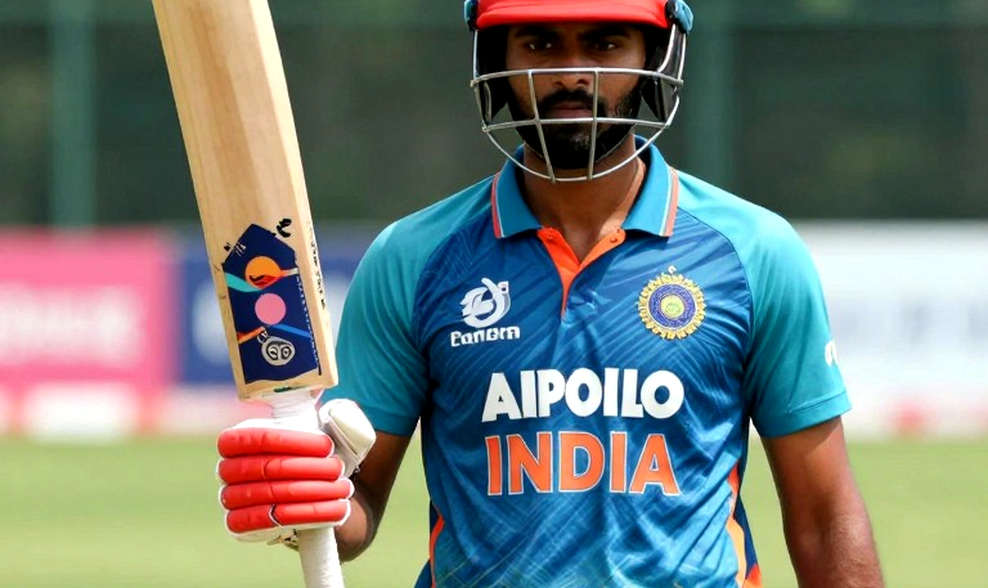
The third fact comes from the calendar, not from anyone's mouth. Five ODIs in New Zealand from 4 November. India have not won a bilateral ODI series there since 2026-19. The 2027 World Cup is in South Africa, Zimbabwe and Namibia — seam and bounce, not subcontinental spin. Both venues ask the same question: can a 39-year-old opener absorb a four-week tournament, back-to-back matches and long travel?
Note the 2026 context too. The hip injury dates to the year India lost the Champions Trophy final to Pakistan. There is no causal link, but Indian cricket files both on the same calendar page, and that page opens whenever a senior player is injured in a major tournament.
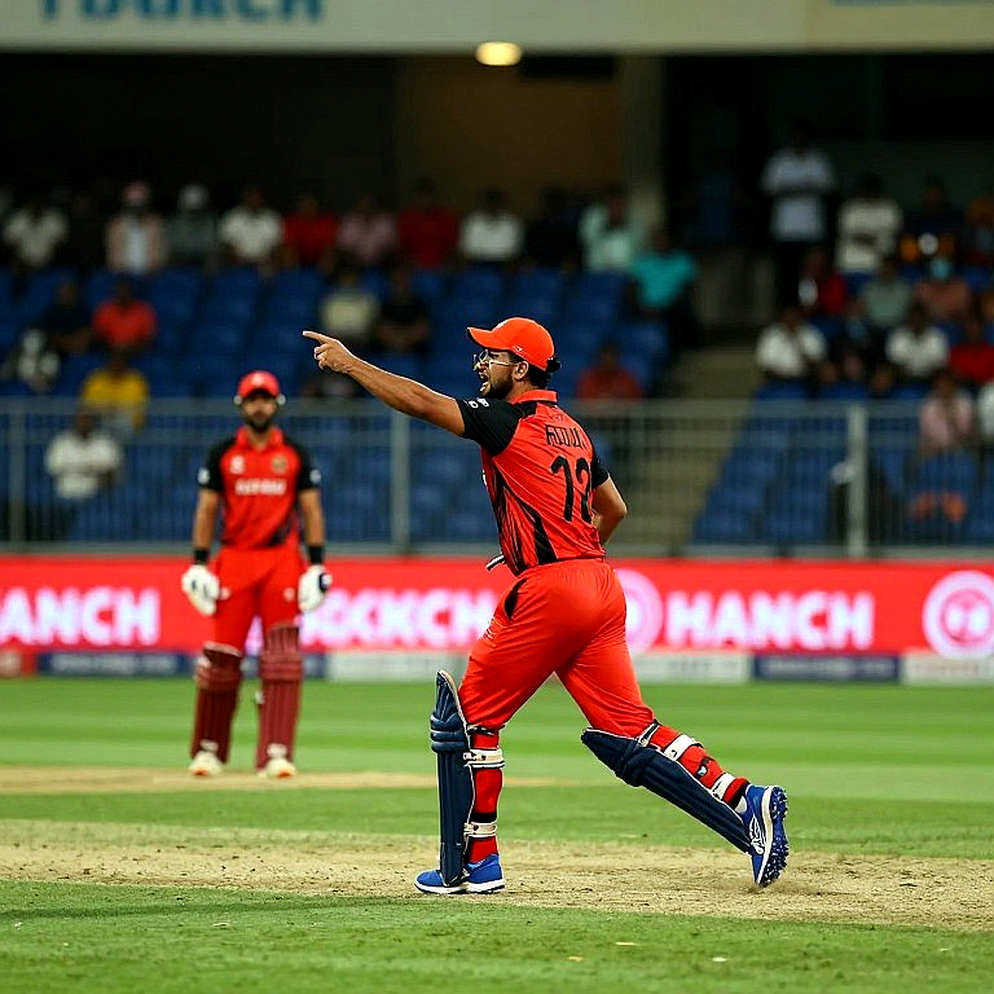
Now the structural fact that governs everything below: this report carries no batting data for Rohit Sharma. No average, no strike rate, no twelve-month trend, no home-away split. A debate with an empty performance column is not a selection debate; it is an opinion poll. The report is also a re-publication of a podcast interview, not independent reporting — two verification layers are missing, the team medical bulletin and any selector's statement.
The fifty-over arithmetic
In T20 a senior batsman's fragility can be hidden: ten overs in the field, twenty minutes at the crease. Not in 50 overs. An opener stands out there for more than three hours, sprints on the boundary in between, and repeats it the next day. Across a multi-week tournament the difference doubles — seven league games, travel, net sessions, a match every third day. Fitness is therefore the third column of selection here, after form and technique, and sometimes ahead of both. Southern African pitches make that column heavier still: the ball arrives quick and the feet must move quickly to meet it. The hip is the joint that makes that movement possible.
In 2026 I bowled 42 overs of left-arm spin against Bombay at Eden Gardens and spent three days charting 318 deliveries in a spiral notebook, marking where each ball was hit. That exercise taught me something no scorecard carries: a batsman's structure does not break first at the big shot. It breaks at the hip that coils for the pull and drives the body forward for the second run. A batsman with a managed hip can still hit sixes; he loses half a stride over 22 yards, and in ODI cricket that half-stride becomes a run-out.
Both the hamstring and the hip flexor have been operated on, and eight years later the area is still described as weak. That is structural information, not cosmetic detail. A player who needs continuous maintenance after two surgeries should have his selection value set partly by his management load, not only by his average. Desai's two-sessions-a-week threshold is that condition in writing. It is a fitness standard, not a charge of laziness.
Two ledgers
I keep two ledgers: one for runs, one for reasons. Here the runs page is blank — the source offers not one number. The reasons page is full: the 2026 injury, two surgeries, a chronic weak area, a two-session maintenance floor, and an away series timed precisely to a selection window. A player managing a chronic hip for seven or eight years is almost certainly on a rationed ODI schedule already; the “fitness debate” is half a workload-management argument wearing a medical costume. That is inference, not fact, and should be filed as such.
The industry benchmark — from experience, not from the source — is that an elite ODI opener sits near a 45 average and a 90-plus strike rate. What Rohit's current figures are cannot be verified from this report and must be pulled from ESPNcricinfo or ICC records before anyone argues seriously. Empty the performance column and fill the rest with the look of a body, and the debate stops being technical.
This is where the confusion is manufactured. “Fat”, “unfit”, “doesn't train” are descriptions of shape, not results of function. In Indian cricket the body is visible and fitness is not, so the public reads shape. Desai's defence breaks that distortion, which is precisely why the headline picked his weakest sentence instead of his strongest.
New Zealand as a clean test
The series starting 4 November is the cleanest available examination, for a technical reason. The ball moves in the air in New Zealand, the pitches carry grass, and an opener must do in the first ten overs what he never has to do in the subcontinent: leave the ball, keep the body upright, hold the hip steady without rotating into the drive. For a player managing a hip, this is the hardest examination; for one who must prove himself, it is the most useful. India have not won a bilateral ODI series there since 2026-19. That is a team statistic, but it lands on individual selection: if the senior batsmen fold against the moving ball, the word “experience” loses weight in the next selection meeting, whatever the stature attached to it.
The name nobody used
There is a blank here worth flagging. The report names no successor. No young opener, no alternative, no plan. Two batsmen at 39 and thereabouts are being discussed for 2027, and the role of the challenger in that discussion is vacant. That is the real risk. A hip is one player's problem; the absence of a successor is a squad-structure problem. If the hip goes and nobody is ready, the loss doubles — and if the replacement has no ODI exposure over the next two and a half years, he will not be ready in 2027 either. The old ledger is not nostalgia; it is a stress test for new numbers, and Indian cricket has failed that particular test twice in the last two World Cup cycles.
The other half of Pamment's sentence
Before the 2026 Ranji quarter-final, as Bengal's coach, I changed the batting order at 1 a.m. after watching 240 deliveries from Railways' left-arm spinner across three seasons. The change won the match. I never explained it to the senior professional who moved down. After that I stopped writing results and started writing process. The question here is the same: has the selection committee written a process for 2027, or is it trusting stature and experience?
Pamment's first half is being quoted: they have earned the right. That sentence is emotional and it plays well. The second half — performance decides — is procedural, and it is where the selection policy actually lives. I read it closely because Pamment spent eight years inside a franchise system; he knows a franchise plays a man on output, not on name. “Earned the right” is a social convention, not a rule. The BCCI selectors retain formal discretion, and nobody has taken it from them. What has changed is that retirement timing is now player-initiated and board-reactive. That shift is both legitimate and risky, because the moment entitlement becomes a selection criterion, objectivity thins.
Desai's two-session threshold is effectively a fitness pass mark that appears in no selection document. The medical staff set the standard; the selection committee never wrote it down. That is exactly where Indian cricket's decisions become interpretable rather than transparent.
The most under-reported line in this story is the one being clipped most. “Ticking bomb” was not an attack on a player's body; it was an objection to the way Indian cricket converts medical information into character judgment. Desai said both things in one interview — the bomb and the rebuttal of laziness — and the headline kept the first. That is an editorial choice, not a medical finding.
The second inversion: Pamment's defence, for all its courtesy, hands the decision to the selectors. A sentence that grants a great player the right to choose also appends the condition that performance chooses for him. The higher the respect, the clearer the condition.
The third point I will keep as inference only: the real risk is not the hip but the unnamed successor. The report does not raise that question, and where the source is silent I leave the column empty rather than invent a conclusion.
Read the New Zealand series on three things, not on runs: whether he is standing at the boundary in the 45th over, whether he is rested for the fourth of five matches, and whether a second opener gets two consecutive innings. Those three will tell you whether the selectors are treating the hip as a standard or the stature as one. The ledger never lies; it only waits for the next reader — and the next reader here is a fast bowler on a green pitch in New Zealand.